There’s a special kind of magic that happens when you grind your coffee beans right before brewing. The aroma fills the kitchen, a promise of the rich, nuanced flavors to come. For any coffee enthusiast, a Home Coffee Grinder isn’t just a kitchen appliance; it’s the gateway to unlocking the full potential of your beans and elevating your daily ritual. Getting the grind right is arguably the most critical step in brewing exceptional coffee, directly impacting extraction and taste.
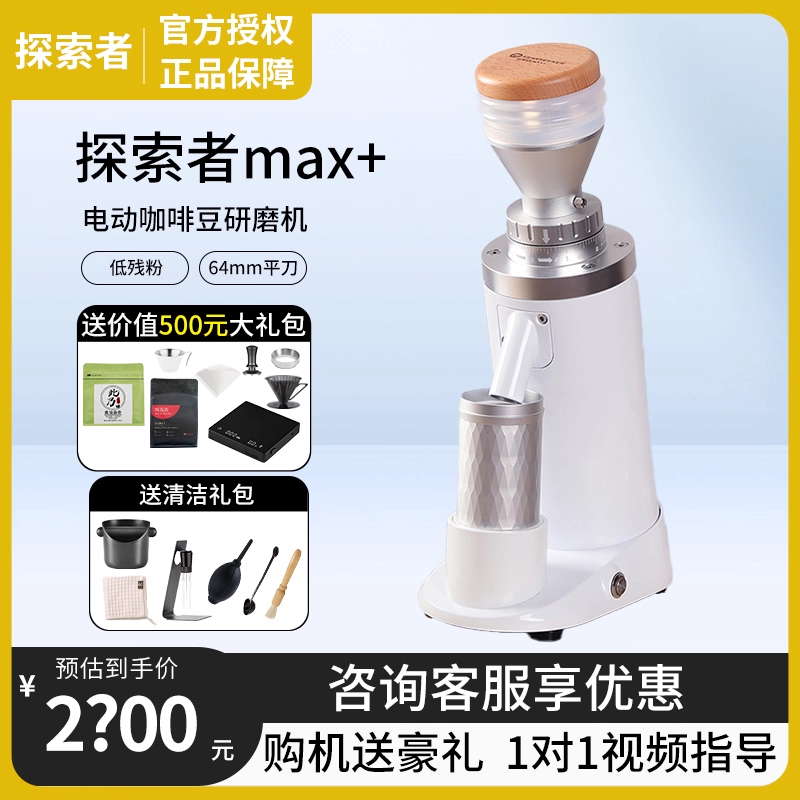
Why a Quality Home Coffee Grinder Makes All the Difference
You might be wondering if your pre-ground coffee is “good enough.” While convenient, pre-ground coffee rapidly loses its volatile aromatic compounds, which are responsible for its complex flavors. The moment coffee is ground, its surface area increases dramatically, exposing it to oxygen, moisture, and light, all of which accelerate staling. Grinding at home ensures you capture those peak flavors and aromas just seconds before brewing.
Beyond freshness, consistency is king. A high-quality home coffee grinder produces uniformly sized particles, which is crucial for even extraction. Imagine trying to steep tea bags of different sizes simultaneously; some would be over-extracted, others under-extracted. The same principle applies to coffee. Inconsistent grinds lead to a muddy, imbalanced cup, tasting both bitter from over-extracted fines and sour from under-extracted larger particles.
Demystifying Coffee Grinders: Burr vs. Blade
When diving into the world of home coffee grinders, you’ll primarily encounter two main types: blade grinders and burr grinders. Understanding their differences is key to making an informed choice.
Blade Grinders: The “Choppers”
Blade grinders operate much like a propeller blender. They use a spinning blade to chop and shatter coffee beans into smaller pieces.
- Pros: Generally inexpensive and widely available.
- Cons:
- Inconsistent Grind: The blades don’t truly “grind” but rather smash the beans, resulting in an uneven mix of fine powder and large chunks. This leads to inconsistent extraction.
- Heat Generation: The high-speed blades generate friction and heat, which can “burn” the coffee, introducing undesirable flavors and diminishing its aromatic qualities.
- Lack of Control: You have minimal control over the grind size, making it difficult to tailor to specific brewing methods.
For serious coffee lovers, blade grinders are typically not recommended, as they compromise the quality of the brew.
Burr Grinders: The “True Grinders”
Burr grinders, on the other hand, use two abrasive surfaces (burrs) that grind coffee beans between them. The distance between these burrs determines the fineness of the grind. There are two primary types of burr grinders: flat burrs and conical burrs.
- Conical Burr Grinders: Feature two cone-shaped burrs, one fitting inside the other. They are often quieter, produce less static, and are known for their grind consistency across a wide range of settings.
- Flat Burr Grinders: Consist of two identical rings with abrasive teeth. Coffee beans pass between them, getting ground as they travel from the center outwards. They often excel at producing very consistent grinds, particularly for espresso.
Regardless of their shape, burr grinders offer superior performance:
- Consistent Grind: They produce a uniform grind, essential for even extraction and a balanced cup.
- Precise Control: Most burr grinders offer multiple grind settings, allowing you to fine-tune the grind size for various brewing methods, from coarse for French press to very fine for espresso.
- Minimal Heat: They operate at lower speeds, minimizing heat generation and preserving the coffee’s delicate flavors.
“A consistent grind is the bedrock of a perfect cup,” advises Clara Beaumont, a renowned coffee expert. “Even the most expensive beans won’t shine if your grinder can’t deliver uniform particles.”
Choosing the Right Home Coffee Grinder for You
Selecting the perfect home coffee grinder involves considering several factors tailored to your brewing habits and budget.
Manual vs. Electric Grinders
- Manual Grinders: These hand-cranked devices are portable, quiet, and typically more affordable than electric burr grinders. They’re excellent for travel or for those who enjoy a more tactile, ritualistic approach to their coffee. However, they require effort, especially for larger quantities, and can be slower.
- Electric Grinders: Offer convenience and speed. They range from basic electric blade grinders (which we’ve discussed are best avoided for quality) to sophisticated electric burr grinders. Electric burr grinders come with various features like programmable settings, timers, and dose-by-weight options.
Grind Settings and Range
Consider the types of coffee you typically brew.
- French Press/Cold Brew: Requires a coarse, uniform grind.
- Drip Coffee/Pour Over: Needs a medium grind.
- Espresso: Demands a very fine, consistent grind.
Ensure the grinder you choose has enough steps or a stepless adjustment mechanism to achieve the specific grind sizes you need. Many entry-level burr grinders offer about 10-15 steps, which is good for most methods, while higher-end models can have 40+ steps or micro-adjustments for espresso precision.
Burrs: Ceramic vs. Steel
- Ceramic Burrs: Known for their durability and ability to stay sharp for a long time. They operate at lower speeds, generating less heat.
- Steel Burrs: Often found in higher-end grinders, they can be sharper than ceramic and produce a very consistent grind. They might heat up slightly more but are also very durable.
Both materials can produce excellent results; the quality of the burr design and manufacturing is often more important than the material itself.
Price and Features
Set a budget. While you can find decent electric burr grinders starting around $100-$150, prices can quickly climb for more advanced features. Look for grinders with:
- Easy-to-clean design: Removable burrs and minimal nooks and crannies simplify maintenance.
- Anti-static features: Reduce mess and wasted coffee.
- Hopper size: Matches the amount of coffee you typically grind.
- Dosing options: Timers or weight-based dosing for consistency.
Using and Maintaining Your Home Coffee Grinder
Proper use and maintenance will extend the life of your grinder and ensure it continues to deliver the best possible results.
Grind Setting Basics
The optimal grind size depends entirely on your brewing method and sometimes even the specific beans. A good starting point is:
- French Press: Coarse, like sea salt.
- Pour Over/Drip: Medium, like regular sand.
- Espresso: Very fine, like powdered sugar (but not clumpy).
If your coffee tastes sour or watery, your grind might be too coarse (under-extraction). If it tastes bitter or astringent, your grind might be too fine (over-extraction). Don’t be afraid to experiment! Adjust your grind size incrementally until you find the sweet spot for your particular beans and brewing method.
Cleaning and Care
Coffee beans release oils that can build up on the burrs over time, leading to stale flavors and reduced performance.
- Regular Cleaning: For daily users, a quick clean every week or two is advisable. Use a brush or vacuum to remove loose grounds.
- Deep Cleaning: Every month or so, disassemble the burrs (if possible, following manufacturer instructions) and clean them thoroughly with a brush and perhaps a small amount of grinder cleaning tablets (food-safe pellets that absorb oils).
- Avoid Water: Never submerge electric grinders in water. Use a damp cloth for the exterior.
The Impact of Grind Fineness on Flavor
The fineness of your coffee grind directly influences how water interacts with the coffee particles during brewing, which in turn dictates the flavor profile.
- Coarse Grind: Less surface area means water passes through quickly, extracting fewer solids. Ideal for methods with longer contact times, like French press or cold brew, preventing over-extraction and bitterness. The resulting cup will often have a fuller body and less bitterness.
- Medium Grind: A balanced approach, suitable for drip coffee makers and pour-overs. This allows for a moderate extraction rate, yielding a well-rounded and balanced cup.
- Fine Grind: Maximizes surface area, allowing water to extract solids very quickly. Essential for espresso, where brewing time is short (20-30 seconds). A fine grind creates resistance, allowing the pressurized water to extract concentrated flavors and create crema. Too fine, and you risk a bitter, over-extracted shot; too coarse, and it will be weak and sour.
Popular Home Coffee Grinder Brands and What Makes Them Stand Out
The market for home coffee grinders is rich with options, catering to every budget and brewing preference.
- Baratza: A favorite among enthusiasts, Baratza is renowned for its consistent grind quality, durability, and excellent customer service. Models like the Encore are often recommended as a robust entry-level burr grinder, while the Virtuoso+ offers enhanced consistency and speed. They are known for their repairability, making them a sustainable choice.
- Capresso: Offering a range of grinders from affordable to high-end, Capresso often balances features and value. Their Infinity series is a popular choice for home users seeking a reliable conical burr grinder.
- OXO: Known for thoughtfully designed kitchen tools, OXO’s conical burr grinder is a strong contender in the mid-range. It features a simple interface, anti-static technology, and consistent performance, making it user-friendly for daily brewing.
- Comandante/Timemore (Manual Grinders): For those seeking unparalleled grind quality in a manual package, brands like Comandante and Timemore are exceptional. They use precision-engineered burrs to deliver espresso-quality grinds, making them popular with pour-over and espresso aficionados who travel or prefer a quieter grinding experience.
- Fellow: With a focus on aesthetic design and exceptional functionality, Fellow’s Ode Brew Grinder (and the Ode Gen 2) has quickly gained popularity, particularly for non-espresso brewing methods. It boasts large flat burrs for incredible consistency and a sleek, modern look.
Frequently Asked Questions About Home Coffee Grinders
Q: Is a burr grinder really worth the extra cost over a blade grinder?
A: Absolutely. A burr grinder provides a consistent grind, which is crucial for even extraction and a superior tasting cup of coffee. Blade grinders chop beans unevenly, leading to inconsistent and often bitter results.
Q: How often should I clean my home coffee grinder?
A: For daily users, a light clean with a brush every week or two is recommended. A deeper clean, involving disassembling the burrs (if applicable) and removing built-up coffee oils, should be done monthly or every other month.
Q: Can I use my home coffee grinder for spices?
A: It’s generally not recommended to use your coffee grinder for spices. Spices can leave strong odors and residues that will transfer to your coffee, affecting its flavor. If you must, dedicate a separate blade grinder for spices.
Q: What grind setting should I use for a pour-over?
A: For a pour-over, you typically want a medium grind, similar in texture to regular sand. However, you might need to adjust slightly finer or coarser based on your specific brewer, filter, and coffee beans to achieve optimal extraction.
Q: How do I know if my grind is too fine or too coarse?
A: If your coffee brews too quickly and tastes sour, weak, or watery, your grind might be too coarse. If it brews too slowly and tastes bitter, astringent, or harsh, your grind is likely too fine. Adjust in small increments to find the sweet spot.
Q: Does the material of the burrs (ceramic vs. steel) matter much?
A: While both ceramic and steel burrs can produce excellent grinds, the quality of the burr design and manufacturing is often more critical. Steel burrs tend to be sharper and faster, while ceramic burrs can last longer. Both are good choices.
The Journey to Your Best Cup Starts Here
Embracing a home coffee grinder is more than just buying an appliance; it’s investing in a better coffee experience. From the enticing aroma of freshly ground beans to the rich, balanced flavors in your cup, the difference is truly transformative. Take the time to understand your brewing method’s grind requirements, choose a quality burr grinder that fits your lifestyle, and commit to regular cleaning. You’ll not only unlock the full potential of your coffee beans but also deepen your appreciation for every sip. Here’s to many delicious cups ahead!