Have you ever wondered why that cafe’s coffee always tastes so much better than your home brew? The secret often lies not in the beans themselves, or even the brewing method, but in the humble coffee bean grinder. This unassuming kitchen appliance is the unsung hero of a truly exceptional cup, transforming whole beans into the perfect grinds that unlock their full flavor potential. For any coffee enthusiast, understanding and choosing the right coffee bean grinder is the first, most crucial step towards brewing a consistently delicious cup every single time. It’s about taking control of your coffee journey, moving beyond stale pre-ground options, and embracing the rich aroma and nuanced flavors that only fresh grounds can deliver.
Why Your Coffee Needs a Great Coffee Bean Grinder
The moment coffee beans are ground, they begin to oxidize and lose their volatile aromatic compounds. This process, often referred to as staling, starts almost immediately. Pre-ground coffee, while convenient, has already lost a significant portion of its flavor and aroma by the time it reaches your mug. A high-quality coffee bean grinder allows you to grind your beans just moments before brewing, preserving their freshness and ensuring a vibrant, aromatic, and flavorful cup.
Beyond freshness, consistency is king in coffee brewing. Different brewing methods—from a quick espresso shot to a leisurely French press—require specific grind sizes for optimal extraction. An inconsistent grind, where you have a mix of coarse and fine particles, leads to uneven extraction. The fine particles will over-extract, causing bitterness, while the coarse particles will under-extract, resulting in a sour or watery taste. A superior coffee bean grinder ensures uniform particle size, which translates directly to a balanced, delicious, and repeatable brew.
Understanding the Types of Coffee Bean Grinders
Not all coffee bean grinders are created equal. The market offers a variety of mechanisms, each with its own advantages and drawbacks. Knowing the differences is key to making an informed choice.
Blade Grinders: The “Chopping” Truth
Blade grinders operate much like a blender, using rapidly spinning blades to chop and shatter coffee beans into smaller pieces. They are typically inexpensive, compact, and easy to use. However, this chopping action creates a highly inconsistent grind, with a wide range of particle sizes, from fine dust to large chunks. This inconsistency severely hinders proper extraction, often leading to a muddy, bitter, or sour cup. For serious coffee lovers, blade grinders are generally not recommended.
Burr Grinders: The Gold Standard for Precision
Burr grinders are considered the gold standard for achieving a consistent and precise grind. Instead of chopping, they crush coffee beans between two abrasive surfaces, known as burrs. The distance between these burrs can be adjusted, allowing you to fine-tune the grind size for any brewing method. This uniform grind is essential for a balanced and flavorful extraction. Burr grinders come in two primary types: conical and flat.
Conical Burr Grinders: The Versatile Workhorse
Conical burr grinders feature a cone-shaped inner burr that rotates within a stationary outer burr. The beans are drawn down between them, gradually crushed as the gap narrows.
- Pros: They operate at lower RPMs, generating less heat and static, which helps preserve the coffee’s delicate oils and aroma. They are often quieter and can be more affordable than flat burrs. Conical burrs are excellent for a wide range of brewing methods, including pour-over, French press, and AeroPress, offering great versatility for the home brewer.
- Cons: While generally consistent, some argue they produce a “bimodal” grind, meaning a distribution with a small percentage of very fine and very coarse particles, which might affect certain highly sensitive brew methods like espresso.
Flat Burr Grinders: Precision for Espresso Aficionados
Flat burr grinders consist of two parallel, ring-shaped burrs. Beans enter the center and are ground as they move outwards between the rotating plates.
- Pros: They are renowned for producing an exceptionally uniform grind, with a tight distribution of particle sizes. This makes them a favorite among espresso enthusiasts and professionals, as precise grind consistency is paramount for pulling perfect espresso shots.
- Cons: Flat burr grinders often operate at higher speeds, which can generate more heat and noise. They can also be more expensive and may retain a small amount of ground coffee between uses.
Manual Coffee Bean Grinders: Craftsmanship in Your Hands
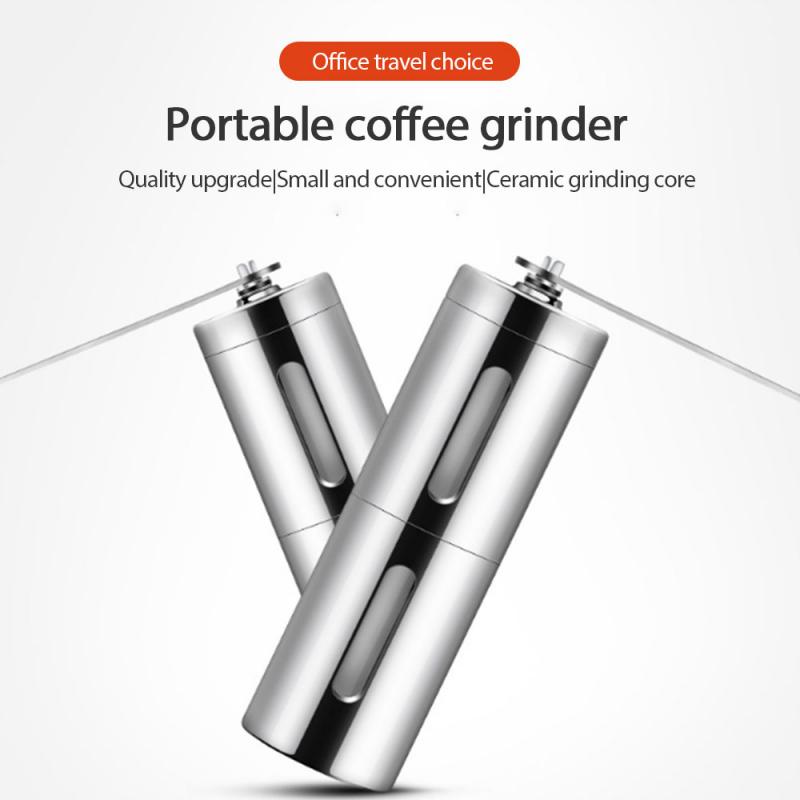
Manual hand grinders typically feature conical burrs and are operated by a hand crank.
- Pros: They are significantly more affordable than electric grinders, incredibly quiet, and perfectly portable, making them ideal for travel or small kitchens. Many modern hand grinders offer excellent grind consistency, rivaling electric models at a fraction of the cost.
- Cons: Grinding by hand requires physical effort, especially for larger quantities or finer grinds like espresso. Capacity is also generally smaller than electric models.
Choosing Your Perfect Coffee Bean Grinder: Key Factors to Consider
Selecting the ideal coffee bean grinder depends on your brewing habits, budget, and desired coffee experience. Here are the critical factors to weigh:
Grind Size and Consistency: Tailoring to Your Brew Method
This is the most crucial factor. Ensure the grinder offers a sufficient range of settings to match your preferred brewing methods.
- Espresso: Requires an extra-fine, powdery grind.
- Pour-over/Drip: Needs a medium, sand-like grind.
- French Press/Cold Brew: Demands a coarse, flaky grind.
A grinder with precise, easily adjustable settings will allow you to dial in the perfect grind for each brew.
Burr Material: Ceramic vs. Steel
Most quality burr grinders use either ceramic or hardened steel burrs.
- Steel Burrs: Generally sharper and more durable, offering a cleaner cut. They tend to be found in higher-end grinders and are excellent for a wide range of grind sizes.
- Ceramic Burrs: Often found in more budget-friendly and manual grinders. They stay sharp for a long time but can be more brittle and prone to chipping if they encounter a foreign object.
Grind Speed and Heat Generation
Lower grind speeds (common in conical burr grinders) are preferable as they produce less heat. Excessive heat during grinding can prematurely degrade the coffee’s delicate oils, leading to a burnt or bitter taste. Look for grinders that emphasize lower RPMs for a cooler grind.
Capacity and Design
Consider the size of the bean hopper (where whole beans are stored) and the grounds bin. If you brew large batches or for multiple people, a larger capacity might be convenient. Also, think about the grinder’s footprint on your counter and its aesthetic appeal.
Adjustability and Settings
A good grinder will offer numerous grind settings. Some even feature micro-adjustments, which are particularly valuable for espresso, allowing you to fine-tune your shots for perfection. Look for clear, intuitive mechanisms for adjusting the grind.
Ease of Cleaning and Maintenance
Coffee beans release oils that can build up over time, affecting performance and flavor. A grinder that is easy to disassemble and clean thoroughly will ensure longevity and consistent taste.
|
Our Picks for the Best Coffee Grinder in 2026
As an Amazon Associate I earn from qualifying purchases.
|
||
| Num | Product | Action |
|---|---|---|
| 1 | BLACK+DECKER One Touch Coffee Grinder, 2/3 Cup Coffee Bean Capacity, Spice Grinder, One Touch Push-Button Control -150 Watts -Stainless Steel Blades |

|
| 2 | Fellow Gen 2 Ode Brew Grinder - Burr, Electric Coffee Bean Grinder with 31 Settings for Drip, French Press & Cold Brew - Small Footprint - Matte Black |
|
| 3 | Amazon Basics Electric Coffee Grinder, Coffee Bean and Spice Grinder, With Heavy-Duty Stainless Steel Grind Blades |
|
| 4 | Amazon Basics Electric Coffee Grinder, Coffee Bean and Spice Grinder, With Heavy-Duty Stainless Steel Grind Blades |
|
| 5 | BLACK+DECKER One Touch Coffee Grinder, 2/3 Cup Coffee Bean Capacity, Spice Grinder, One Touch Push-Button Control -150 Watts -Stainless Steel Blades |
|
| 6 | Electric Coffee Grinder, Conical Burr Grinder with 17 Precise Settings, 10oz Capacity, Quiet Operation, Automatic Shut-Off for Espresso, French Press, Cold Brew & Drip Coffee |
|
| 7 | OXO Brew Conical Burr Coffee Grinder - Silver, Stainless Steel Burrs, One-Touch Automatic Smart Grind |
|
| 8 | Hamilton Beach Fresh Grind Electric Coffee Grinder for Beans, Spices and More, Stainless Steel Blades, Removable Chamber, Makes up to 12 Cups, Black |
|
| 9 | Cuisinart Coffee Grinder, Electric One-Touch Automatic Burr Coffee Grinder with 18-Position Grind Selector, Cup Size Selector for 4 – 18 Cups, DBM-8P1, Black Stainless |
|
| 10 | Touch&Match On-Demand Coffee Grinder, Professional Burr Grinder Made in Italy with Touch Screen, Precise Settings for Espresso, Moka, Filter & Americano, Fresh Grinding |
|