There’s a special joy that comes with brewing a perfect cup of coffee, and at the heart of that experience lies the grind. For coffee lovers with limited counter space, a penchant for travel, or simply a desire for efficiency, finding the Best Small Coffee Grinder can be a game-changer. These compact powerhouses ensure you never compromise on flavor, whether you’re at home or exploring the world. Let’s delve into why a quality small grinder is essential and how to pick the perfect one for your brewing adventures.
Why Your Grind Matters: The Foundation of Flavor
Imagine biting into a perfectly ripe peach versus one that’s under-ripe. The difference in flavor is undeniable. The same goes for coffee. Grinding your beans just before brewing is the single most impactful step in unlocking their full potential. Whole coffee beans, much like peaches, are delicate. Once ground, their complex aromas and oils begin to oxidize rapidly, losing their vibrancy and depth. A small, efficient coffee grinder ensures you capture that peak freshness every single time. It’s about precision, consistency, and ultimately, a superior tasting cup.
Exploring the World of Small Coffee Grinders: Manual vs. Electric
When searching for the best small coffee grinder, you’ll primarily encounter two categories: manual and electric. Each offers distinct advantages tailored to different lifestyles and preferences.
Manual Burr Grinders: The Craft in Your Hands
Manual burr grinders are the quiet heroes of the coffee world. They are often praised for their portability and ability to deliver an incredibly consistent grind, especially for those meticulously crafting pour-overs or AeroPress brews. These grinders require a bit of elbow grease, as you manually turn a crank to process the beans.
- Pros:
- Ultimate Portability: Their compact size makes them ideal for travel, camping, or small kitchens where every inch counts.
- Whisper-Quiet Operation: Enjoy your morning ritual without waking the household.
- Exceptional Grind Consistency: Many high-end manual grinders offer precision comparable to their electric counterparts.
- Affordability: You can often find excellent quality manual grinders at a lower price point than electric models.
- Engaging Ritual: For many, the act of hand-grinding is a meditative start to the day.
- Cons:
- Physical Effort: Grinding takes time and effort, especially for finer grinds like espresso or larger quantities.
- Limited Capacity: Most are designed for single-dosing, producing enough for one or two cups at a time.
Electric Burr Grinders: Speed and Convenience
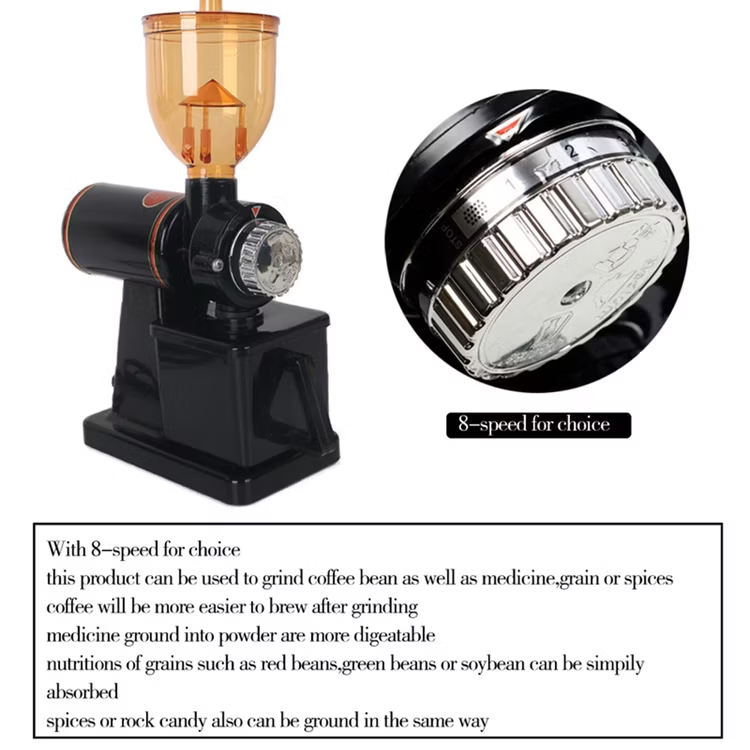
Electric small coffee grinders offer convenience and speed, making them a popular choice for daily use. While generally larger than their manual cousins, many compact electric models are perfectly suited for smaller kitchens.
- Pros:
- Effortless Grinding: Just press a button, and your beans are ground in seconds.
- Higher Capacity: Many models can hold more beans, ideal for multiple servings or larger brew methods.
- Programmable Settings: Some come with timers or dose settings for added convenience.
- Consistency: Good quality electric burr grinders deliver consistent particle sizes.
- Cons:
- Noise: Even smaller electric grinders can be noticeably louder than manual options.
- Price: Quality electric burr grinders typically come with a higher price tag.
- Less Portable: They require a power source and are generally bulkier, limiting their travel potential.
It’s crucial to note that while blade grinders exist, they are generally not recommended for quality coffee. They chop beans inconsistently, creating a mix of fine dust and large chunks that lead to uneven extraction and a less enjoyable cup. Always opt for a burr grinder, whether manual or electric, for superior results.
The Undeniable Benefits of Investing in a Quality Small Coffee Grinder
Beyond the convenience of size, a high-quality small coffee grinder brings a wealth of advantages to your daily coffee ritual.
- Superior Flavor and Aroma Preservation: Grinding fresh ensures that the volatile oils and aromatic compounds in your coffee beans are released just before brewing. This means a richer, more nuanced flavor and an intoxicating aroma that pre-ground coffee simply cannot match. “A great grinder is the silent architect of flavor,” remarks Dr. Alistair Finch, a renowned coffee scientist. “It’s where the magic of transforming a bean into a beverage truly begins.”
- Grind Consistency for Optimal Extraction: A consistent grind size is paramount for even extraction. If your grinds are uneven, some particles will over-extract (leading to bitterness), while others under-extract (resulting in sourness). Burr grinders, even the small ones, deliver uniform particles, allowing water to interact evenly with all the coffee grounds, leading to a balanced and delicious cup.
- Portability and Space-Saving Design: For city dwellers, frequent travelers, or anyone with a cozy kitchen, a small coffee grinder is a blessing. Manual grinders can often fit into a backpack or suitcase, while compact electric models tuck neatly into a cupboard or corner, keeping your counter clutter-free.
- Cost-Effectiveness in the Long Run: While the initial investment in a quality burr grinder might seem higher than pre-ground coffee, it pays dividends. Buying whole beans is often more economical, and the improved flavor means less wasted coffee due to subpar brewing. Many manual options are particularly budget-friendly, offering exceptional value without breaking the bank.
How to Choose the Right Small Coffee Grinder for Your Needs
Selecting the best small coffee grinder involves considering a few key factors to match your brewing habits and lifestyle.
1. Burr Type: Conical vs. Flat
- Conical Burrs: Often found in smaller grinders, these cone-shaped burrs are excellent at producing consistent grounds across a wide range of sizes. They tend to be more forgiving and generate less heat, preserving flavor. Many top manual grinders feature conical burrs.
- Flat Burrs: Consisting of two parallel, ring-shaped burrs, flat burrs can offer exceptional precision and consistency, particularly for espresso. While historically found in larger electric grinders, some newer compact electric models are incorporating flat burrs.
2. Grind Settings and Adjustability
The versatility of your grinder depends on its range of grind settings.
- What is a crucial feature for precise brewing?
For precise brewing, look for a grinder with a wide spectrum of grind settings. You’ll need very fine for espresso, medium-fine for pour-over, medium for drip, and coarse for French press or cold brew. - Why are micro-adjustments important for espresso?
Micro-adjustments allow you to “dial in” your espresso shots with extreme precision, making tiny changes to achieve the perfect extraction and flavor balance.
3. Capacity: Single-Dosing or Small Hopper?
- Why might a single-dose grinder be ideal for some users?
Single-dosing grinders are perfect for those who want to grind fresh beans for each cup, minimizing stale coffee. They’re also great for experimenting with different beans without having to empty a hopper. - Who would benefit from a small hopper?
A small hopper is beneficial if you brew multiple cups daily or prefer the convenience of storing a small batch of beans ready for grinding.
4. Manual vs. Electric: Re-evaluating Your Priority
Your choice here hinges on your priorities:
- Choose Manual if: Portability, quiet operation, lower cost, and a hands-on approach are important to you. You’re okay with a bit of effort for superior taste.
- Choose Electric if: Speed, convenience, and grinding for multiple servings are your main concerns, and you don’t mind a bit of noise or a higher price point.
5. Material and Durability
The construction materials directly impact a grinder’s lifespan and performance.
- What materials signify a durable grinder?
Stainless steel, ceramic burrs, and robust housing (metal or high-quality plastic) indicate a durable grinder built to last. Ceramic burrs are known for their sharpness retention and resistance to rust, while steel burrs offer excellent cutting precision.
6. Ease of Cleaning
- Why is easy cleaning crucial for maintaining coffee quality?
Regular cleaning prevents coffee oils and stale grounds from building up, which can impart rancid flavors to your fresh coffee. Look for grinders that are easy to disassemble for thorough cleaning.
7. Noise Level
If you’re an early riser or live in close quarters, a quiet grinder can make a big difference. Manual grinders are inherently quiet, while some electric models are specifically designed with noise reduction in mind.
Expert Tips for Using and Maintaining Your Small Coffee Grinder
To get the most out of your best small coffee grinder, proper usage and consistent maintenance are key.
- Grind Just Before Brewing: This is the golden rule. Coffee begins to stale seconds after grinding, so only grind the amount you need for your immediate brew.
- Understand Your Grind Settings: Experiment! Use your grinder’s settings to match your brewing method. A fine grind for espresso will choke a French press, and a coarse grind for French press will lead to weak espresso.
- Regular Cleaning is Non-Negotiable:
- How often should a small coffee grinder be cleaned?
Regular maintenance is crucial for optimal flavor and performance. For daily users, a quick brush-out after each use is recommended, and a deeper clean every 1-2 weeks is ideal. If you use oily dark roasts, clean more frequently. - What tools are best for cleaning a burr grinder?
A small brush (like an old toothbrush) and a vacuum cleaner are excellent for removing loose grounds and oils. For a deeper clean, specialized food-safe grinder cleaning pellets can be run through the grinder to absorb oils and dislodge stubborn residue. - Why should you avoid grinding rice in a burr grinder?
Contrary to popular belief, grinding rice in a burr grinder can damage the burrs, especially ceramic ones, and may void your warranty. Rice is too hard and can cause chipping or misalignment.
- How often should a small coffee grinder be cleaned?
- Store Beans Properly: Keep your whole beans in an airtight container, away from light, heat, and moisture, to preserve their freshness until they hit the grinder.
The Delicate Dance: How Grind Size Influences Your Coffee’s Flavor
The relationship between grind size and flavor is fascinating and fundamental to great coffee. Here’s a quick guide:
- Fine Grind (Like Powder or Table Salt):
- Brew Methods: Espresso, Turkish coffee.
- Flavor Impact: Maximizes surface area for quick extraction. Essential for espresso’s characteristic strong flavor and crema. Too fine can lead to over-extraction and bitterness.
- Medium Grind (Like Sand):
- Brew Methods: Pour-over, drip coffee, AeroPress.
- Flavor Impact: A balanced extraction that allows for nuanced flavors to shine. It’s the most common grind size and offers versatility.
- Coarse Grind (Like Sea Salt):
- Brew Methods: French Press, cold brew.
- Flavor Impact: Minimizes surface area for longer immersion brewing. Prevents over-extraction and bitterness in methods with extended contact time. Too coarse can result in weak, sour coffee.
Understanding and adjusting your grind size is a key skill in becoming a home barista, and a good small grinder gives you the control to master it.
Popular Small Coffee Grinder Brands and Noteworthy Models
The market for small coffee grinders is rich with excellent options. Here are a few brands and models that consistently receive high marks for quality, consistency, and compact design:
Manual Small Grinders:
- 1Zpresso (J-Ultra, X-Ultra, Q Air): Known for their precision, robust build, and excellent grind consistency across various brew methods, including espresso. The Q Air is particularly popular for travel due to its lightweight design.
- Comandante C40 MK4: Often considered the gold standard for manual grinding, offering unparalleled consistency and build quality, though it comes at a premium price.
- Timemore (Chestnut C2, C3 Pro, Slim): These offer fantastic value, providing consistent grinds and solid construction at an accessible price, making them a favorite for beginners and experienced users alike. The Slim is especially compact.
- Porlex Mini: A durable and compact stainless steel grinder, perfect for travel and fitting neatly into an AeroPress.
Electric Small Grinders:
- Baratza Encore ESP: A highly recommended entry-level electric burr grinder that offers impressive versatility, capable of grinding for everything from espresso to French press with good consistency.
- Fellow Opus: A stylish and capable all-purpose grinder known for its aesthetic appeal and good grind consistency for various brew methods, including espresso.
- OXO Brew Compact Conical Burr Coffee Grinder: A strong contender for value, offering consistent performance and a compact footprint that fits well in smaller kitchens.
When browsing for your perfect grinder, remember to read recent reviews and compare specifications to ensure it meets your specific brewing needs and space constraints. Many excellent models can be found on popular e-commerce platforms and specialty coffee retailers.
Frequently Asked Questions About Small Coffee Grinders
Q: Why is a burr grinder better than a blade grinder for small spaces?
A: A burr grinder, whether manual or electric, is superior because it crushes coffee beans between two abrasive surfaces, producing a uniform grind size. This consistency is vital for even extraction and better flavor. Blade grinders, which chop beans inconsistently, lead to a mix of fine dust and large chunks, resulting in uneven extraction and a less palatable cup of coffee.
Q: How often should I clean my small coffee grinder?
A: For optimal performance and flavor, a small coffee grinder should be brushed out after each use to remove loose grounds. A deeper clean using specialized cleaning pellets or by disassembling the burrs for a thorough brush-down is recommended every one to two weeks, especially if you use oily dark roasts.
Q: Can small coffee grinders make espresso grind?
A: Yes, many high-quality small coffee grinders, particularly those with a good range of micro-adjustments, are perfectly capable of producing the very fine, consistent grind required for espresso. Manual grinders like the 1Zpresso J-Ultra or electric options like the Baratza Encore ESP are designed with espresso precision in mind.
Q: Are manual small grinders good for daily use?
A: Absolutely! Manual small grinders are excellent for daily use, especially if you typically brew one or two cups at a time. They offer a quiet, consistent grind and a hands-on experience that many coffee enthusiasts cherish. However, if you’re grinding for large batches or multiple times a day, an electric grinder might offer more convenience.
Q: What’s the best small coffee grinder for travel?
A: The best small coffee grinder for travel is typically a manual burr grinder due to its compact size, lack of electricity requirement, and durability. Models like the Porlex Mini, 1Zpresso Q Air, or Timemore C2 are popular choices that can easily fit into a travel bag and withstand the rigors of being on the go.
Conclusion: Your Journey to the Perfect Cup Starts Here
Investing in the best small coffee grinder is more than just buying an appliance; it’s an investment in your daily joy and the quality of your coffee experience. These compact wonders prove that great things truly do come in small packages, offering unparalleled freshness, control, and flavor, whether you’re at home or adventuring. So go ahead, choose a grinder that sparks your passion, experiment with different beans and grind settings, and savor every aromatic sip. Your perfect cup awaits!